Chapter 7
MENTAL RELAXATION AND MEDITATION
The very first step is to learn the fact that we are like software running in a computer. As in a computer, more than one thing runs at the same time, in parallel. For example, you have a part of you that runs your breathing automatically, all the time — but if you like, you can take it over just by thinking about it. The same is true of everything else about you; you simply do not know it yet. With a little practice, for instance, you can easily change your heart rate or your body temperature; with more advanced knowledge, you can change your weight, your appearance, and much more. The next step is to learn, and to believe, that you are much more than a single piece — even your thoughts are more than one component running a single task. It goes further still: our brain is just part of the whole we are; the brain is just one more component of who and what we are. This may be difficult to understand, and it will take some time to come to this new reality; it may even be painful to admit these new facts to yourself. But trust me, you will be glad you did.
Meditation is yet another word, like faith, that has taken me a very long time to comprehend. You see, meditation is a tool by which you allow (according to Bashar) a 3rd part — out of a total of 12 DNA parts, of which only 2 are in our physical 3rd dimension (the 3rd part being in transition from the 3rd to the 4th dimension) — to access the 9 parts that are in the 4th dimension, to will what you want, and much more. This is the missing link referred to as the second coming of Christ: an opportunity to connect with our true (higher) self, and to enable those who are ready to ascend one level, up to the 4th density/dimension. The year 2012 is when this dimensional door fully opens for those who are ready, and closes the ability to remain on this planet for those who are not.
Some will survive it even though they did not prepare, because they had the skills; but most will perish. This is what the book of Revelation — also known as the Apocalypse — talks about in the Bible, in a very encoded language that most do not understand. Between now and 2012, we all have an opportunity to get ready, because, ready or not, it is going to fully open.
The time between now and 2012 is a time of tribulation — a time of testing, a time of many challenges. Though we get pushed to our limits, we hardly ever get pushed past them; if you think about it, all your problems have been survivable. Only when one chooses not to survive does death come along to force another opportunity. We are all powerful, all-inclusive, and all-loving; we simply do not yet know that we are GOD. Through meditation, the first thing that happens is that our bodies go through a very quick repair of our 3rd-dimensional cells; in addition, it opens the channel of communication that enables telepathy, telepathic sensing, remote vision and sensing, apparitions, psychokinesis, clairgustance, psychic dreams, precognition, psychometry, clairsentience, déjà vu, clairaudience, clairvoyance, telekinesis, astral travel, and much more.
Faith: the art of knowing that something WILL happen. For example, you know that if you apply a flame to a flammable gas, the gas will ignite; this is faith — the belief that something WILL happen.
Psychometry: the ability of those who can pick up a personal item belonging to an unknown person and uncover what emotions that person is feeling. It can also be used to find lost objects, calling out to the energy already stored in the object to bring about its return.
Clairaudience: the perception of messages, in thought forms, from an entity who exists in another realm. You “hear” what they are saying in your mind. Clairaudience is a form of channeling; you may actually hear spirits talking or singing in your head, though there is no audible sound.
Clairgustance: being aware of tastes without putting anything in your mouth — perceiving the essence of a substance through taste, from the spiritual or ethereal realms.
Clairsentience: experiencing other realities or entities through the sense of touch — a tickling sensation on the body (usually the face, hands, or neck) when connecting with spirit; the hairs on the back of the neck standing on end when a spirit touches you; a sensation on the left side of the face when talking with spirit.
Clairvoyance: the art of “seeing” with senses beyond the five we normally use. Often called the “sixth sense,” it relates to the images always present in your mind that bring messages from other realms. These images may be shapes or colors, still or animated, lasting a few seconds or longer; you may “see” them with your eyes open or closed.
All of these become enabled the minute we make an effort to use any of them — the minute we ask, and allow, for it to happen. ORMUS/ORME is the fuel that enables this 3rd DNA part. Note that this happens at a different pace for each person: for some it has happened so fast that the next day they were institutionalized in a mental hospital; for others it takes many years; for some it even takes many lifetimes; and some even take steps backward, to correct and learn their lessons better — like taking a class over again in order to understand it, or to perfect it.
The following is an excerpt from Adrian Cooper’s Astral Pulse Newsletter, on the subject of meditation:
In order to meditate effectively, a sufficient degree of concentration is required, which is one reason this extremely important ability should be practiced as frequently as possible. Without adequate powers of concentration, it will be very difficult indeed to silence the mind, and therefore to achieve anything worthwhile; so concentration is an ability well worth practicing.
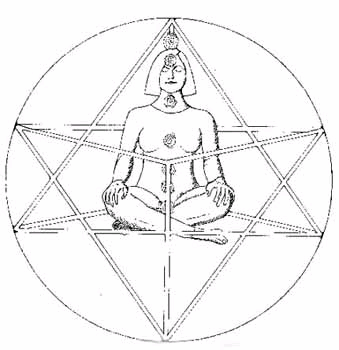
It is very important to meditate sitting in a totally upright position, with your spine completely straight. Meditation should not be done reclining, or even leaning back in a comfortable chair. If sitting on a chair, it is best to sit totally upright, spine absolutely vertical, on a hard-backed chair — a dining chair, for example — with your legs and knees firmly together and your hands, palms down, on your thighs. Alternatively, sitting cross-legged on the floor, totally upright with a straight spine, is also an excellent position. It is not necessary, however, to place yourself formally into an exotic position such as the full or half lotus, though you may of course do so if you wish.
It is fine in the very early stages to sit on a pillow to make yourself more comfortable, but never sit with your back against the backrest of a chair, or against any other support; your back, and therefore your spine, must be absolutely straight and totally unsupported. Your hands should rest lightly, palms down, on your thighs. I am often asked whether it is possible to meditate while lying down on a bed. The answer is yes — it is possible, but not always advisable. The main reason is the risk of falling asleep: the bed is associated by your subconscious mind with “sleep,” and as soon as you lie down, the chances are that your subconscious will automatically place you in the sleep state, which of course is not conducive to meditation.
It is, however, quite possible to separate meditation from sleep by telling your subconscious mind that this is a time for meditation rather than sleep. To assist this, it is a good idea to do something differently from your regular sleep routine that your subconscious can associate with meditation. This might, for example, be removing the pillows so you are lying absolutely flat. You could light a candle or burn your favorite incense — the emphasis, of course, being on safety; do not burn anything that could be knocked over or otherwise pose a risk. The important thing is to separate meditation time from sleep time in your subconscious mind; if you can do this, then lying down is fine. Of course, you need not lie on a bed at all: to separate meditation from sleep, you can place something on the floor, or, better still, lie down on the hard floor.
I am also asked why it is necessary to keep the spine erect while meditating. There are various reasons; the one most frequently given is to aid the energy flow. While this may be true up to a point — specifically within the energy meridians of your energy body — we must dispel one common misunderstanding: that energy somehow comes down from “above,” enters through the crown of the head (the “crown chakra”), and travels down through the body, eventually leaving at the feet. It is quite possible, using the powers of the mind, to guide energy this way, but it is certainly not “natural.” The source of all energy is The Source, in absolute terms, and The Source is within us — not external to us, above, below, or anywhere else. We are all an integral aspect, and therefore an extension, of The Source, and The Source is within, not without.
So when we draw energy into ourselves — for healing, for example — we imagine the energy being provided from The Source, which is within. That said, energy is all around us physically as well, so we can concentrate the energy around us and “breathe” it into ourselves, thereby accumulating it. It is a good idea to meditate in the same place, at the same time of day, where you will not be disturbed. Although items such as candles and incense are not strictly required, you may well find them useful in setting the meditative mood and focusing your mind. Certain scented candles or incense will become associated with your meditation time and may therefore help you reach the required level of consciousness and relaxation more quickly. This is entirely a matter of personal choice. The next stage is to perform some deep-breathing exercises, to help you achieve the required relaxation and to focus your mind away from mundane matters. Breathing in for a slow count of five, holding for a slow count of five, and breathing out for a further slow count of five is excellent for this. Repeat this five times initially, and more if you find it beneficial. While breathing, you can also imagine inhaling pure, glowing, sparkling white light, and exhaling, through your nose, grey light containing any tension or negativity stored in your body.
When you are totally relaxed, use all your powers of concentration to empty your mind of all thoughts; only a complete vacancy of mind should prevail. Should you have difficulty achieving this at first, you can reach this state in stages, over time. It really does not matter how many sessions it takes to achieve total vacancy of mind — but reach it you must, in order to meditate effectively, and the sooner the better. The concentration exercises discussed previously are an excellent way to achieve it, and I strongly recommend completing them before commencing the formal practice of meditation.
To begin, assume your chosen meditation position, attain the necessary degree of deep physical relaxation through the breathing exercises, and then begin to observe your thoughts as they pass through your mind. It is very important not to participate in these thoughts, tempting though it may be, but merely to be a passive observer — acknowledging the thoughts as they occur, but then allowing them to simply drift by. Continue this for as long as you can, but ideally for at least ten minutes a day, with thirty minutes a day as your ideal objective. When you first start, you may be besieged with thoughts, particularly if you have not practiced the concentration exercises first (and it is strongly suggested that you do); but from session to session, the thoughts will diminish until they finally become few and far between. This might take only a week, or several weeks, or even months, depending on your circumstances and your levels of relaxation, concentration, and focus.
You can reinforce this process throughout the day by thinking only about what you are doing at any given moment. Do not allow extraneous thoughts to interfere with your current task. If you are driving, for example, think only about driving, and do not allow your mind to wander to unrelated matters. The same applies to any activity — shopping, your job, cooking a meal, and so on. Always focus exclusively on the task at hand, to the total exclusion of all other thoughts. This will greatly assist thought control and strengthen your powers of concentration.
The next stage is to select a single thought or object of your own choice and hold it in your mind for as long as possible. This might be a memory of a place you enjoy visiting, a memorable holiday, or any other happy memory. It may be easier at first to visualize a familiar object — a favorite picture, an item of furniture, the image of a loved one, or any simple household item such as a fruit, candle, or cup. Having decided on the object, assume your chosen posture, and, after your relaxation and breathing exercises, bring the thought or image firmly into your mind, as realistically and with as much presence as possible. Ideally it should fill your entire mind. If any other thought tries to intrude, then, with all the willpower you can summon, reject it immediately and bring your mind firmly back to your intended thought or image.
It is very important indeed to reject any intruding thought the moment it tries to join your chosen one. You will find this exercise becomes progressively easier over time, with your thought or image becoming stronger and intruding thoughts becoming fewer and easier to reject. When you can hold your image vividly and solidly in your mind for ten minutes without wavering, the final stage is to be able to dismiss it at will, right at the end of your session, leaving you with a full vacancy of mind where the image once was. Hold your mind empty for a few moments before gently raising your consciousness back to the physical level. Once you have accomplished this, future sessions can proceed to full meditation — a full vacancy of mind — by assuming your posture and, rather than holding a thought or image, holding your mind totally devoid of all thoughts. In the beginning, the occasional thought may attempt to intrude into your silence; if it does, simply use all your willpower to reject it immediately. When you can achieve this stage, you are ready to meditate effectively.
As an interim stage, you can begin your meditations with a single chosen thought or image, and then, after a couple of minutes, remove it and proceed with a complete vacancy of mind. After a time, you will find it possible to omit the thought or image altogether and proceed immediately with a complete vacancy of mind from the outset. Having achieved this level of concentration and emptiness, you can now meditate effectively. A session should ideally be at least twenty minutes, though less will suffice initially. This, however, is only the beginning; as you progress, each session will progressively deepen your inner awareness.
Remember, you are focusing inward, toward The Source, and not to some “higher” level relative to The Source. As mentioned, when we refer to the “higher” worlds and states of being, these are actually inner states relative to the physical world and body, with the highest vibration of The Source — The First Cause, God — at the very center, and the lowest vibration of energy at the outermost, physical, material level, from where meditation commences. Your focus should therefore be inward, toward the Astral and Spiritual worlds, your Higher Self, and ultimately the highest and most Divine: God. With time and dedicated daily practice, meditation will grow progressively deeper, with more profound levels of inner awareness, soon becoming a very blissful experience. Ideally, while meditating, you should reach a stage where you completely lose contact with your physical senses, body, and surroundings, being totally focused on the inner states of consciousness. This is an ideal state to reach, and should be your immediate objective.
Meditation should become a daily habit, and one you always look forward to. There is no fixed duration; some people meditate for up to thirty minutes a day, while others meditate for several hours at a time, or even a full day, completely absorbed in their inner consciousness. During deep meditation, situations may occur that you should be aware of, often involving imagery of varying intensity. One is often known as the “TV screen” or “cinema screen” effect — exactly the same effect that frequently occurs during astral projection. This “screen” is actually a “window” into the Astral planes. Should it occur, you have two choices: observe the screen and simply learn from these visions and what they mean to you, or convert the meditation into a full astral projection by imagining yourself moving toward the screen as it grows larger and larger, eventually passing straight through the image into the Astral worlds. It is also quite possible — and quite common for some people — that the meditation becomes a full out-of-body experience. The first sign is usually the ability to “see” through your closed eyelids, meaning your Etheric body has already moved out of phase with your physical body, as happens during a normal sleep cycle; you are viewing your surroundings with your inner senses rather than your physical eyes. Should this occur, you can maintain absolute concentration and remain in meditation, or simply decide to leave your body and enjoy the out-of-body experience. If you decide on the OBE, proceed as you would for one. If you decide to remain in meditation, your Etheric vision might remain, might fade, or — very often, as your vibrations rise — give way to the “viewing” of the Astral worlds. As this is a meditation session, it is preferable to choose the “viewing” option rather than converting to a full astral projection or an OBE, but the choice is always yours. It is always best to follow your inner guidance, which can be much more powerful during meditation, being much more closely in touch with your Higher — or, more accurately, Inner — Self. Much can be learned simply by observing the Astral images displayed before you, and in particular any associated symbolism.
While meditating and focusing on your inner awareness, your mind is also tuned into the inner worlds of the Astral and Spiritual planes — at any level, depending on your level of vibration, which always corresponds to the level of the universe your consciousness is focused within. This focus and awareness can frequently result in communication with beings such as spirit guides, deceased relatives, or even your Higher Self; these possibilities are among the most valuable aspects of meditation. Should you make contact, you will clearly “hear” their voices in your head, often just as clearly as if they were speaking to you in the physical world. You might also “see” the beings you are communicating with, by means of clairvoyance. It is most useful to engage in two-way communication when these opportunities arise; much can be learned about the inner realities, and in particular about yourself and your life situations — always depending on the precise nature of the being you are communicating with. Communication is performed mentally, by telepathy, in the form of words, images, or both. You can ask questions simply by thinking or imagining them as clearly as possible, and the answers will arrive back in a similar way.
As you progressively absorb yourself into meditation, your brainwave frequencies will slow down. This also happens naturally throughout the day, according to your activity, but more usually occurs before sleep, when the brain passes through all the decreasing frequencies until you fall asleep completely. The highest brainwave frequencies occur in the normal waking state — the “beta” state, characterized by very fast frequencies between 13 Hz and 40 Hz. When brainwaves slow down, as often happens while daydreaming and as usually happens as meditation progresses, the “alpha” state is reached, characterized by frequencies of roughly 7 Hz to 13 Hz. During meditation or trance work, after sufficient practice, brainwaves can slow further, to the “theta” state, characterized by frequencies of 3.5 Hz to 7 Hz. Theta is the most profoundly clear and focused state; many people experience profound inspiration, intuition, ideas, and other thoughts while in it, originating both from beings of the inner spheres and from the Higher Self. Theta is also the state of vivid imagery, where the powers of imagination and visualization are particularly profound.
There have been famous scientists in the past who would place themselves into such a deep state of concentration and depth of thought that they reached the theta state. Indeed, many have intentionally invoked it for maximum inspiration and creativity, resulting in many important inventions and theories — a notable example being the special theory of relativity, which Albert Einstein postulated while in a deep, theta state of mind.
Meditation in general — and, in particular, deep, highly focused meditation with a high degree of concentration — is an excellent way to obtain answers to almost anything. These answers will often originate from your Higher Self (more accurately, your Inner Self), that part of you in the most direct contact with God, and they are messages that are totally reliable. The Higher Self is sublime; it knows everything that “Is,” and is mostly concerned with your evolution. Any inspiration, intuition, or message from the Higher Self is unmistakable for what it is, and must always be acted upon, without question. Failure to act on inspiration from the Higher Self will lead either to no result or, sometimes worse, to suffering.
These are just a few of the numerous possibilities and benefits of deep meditation. For many people, particularly in Far Eastern cultures, the ultimate objective of true meditation is to achieve such a profound level of inner consciousness as to become one with the very highest of the Spiritual planes — a state mystically known as “Samadhi.” Those who achieve this state of extreme bliss, approaching the innermost levels of energy and vibration, know beyond any doubt that everything in the universe is indeed one, and that everything and everyone is an integral part of “everything that Is”: The Source, God.
One of the most important aspects of the practice of meditation is to remain totally focused, with maximum concentration, while keeping your mind free of all thoughts and external influences, and to accept and learn from any inner situation that arises. Maintain clarity of mind, and be prepared for any experience from which valuable lessons can be learned and information or intuition gained. You will very soon find that your daily meditation is something you look forward to, and your sessions will become progressively longer and more profound with practice. Dedication, commitment, and daily practice are the keys to successful meditation. The important thing to keep in mind is that meditation is not — or at least should not be perceived as — some mystical or “oriental” process performed in an obscure, contorted position, but rather a profoundly beneficial experience that everyone can, and should, practice. Meditation can help you achieve anything; but most of all, it places us in communication with the true source of our being, and therefore of who we really are: infinite, immortal, unlimited aspects of The Source, The First Cause, “God,” with exactly the same Divine potential, powers, and capabilities. Just as “God” is the creator of the macrocosm — everything that “Is” — so we, as Divine, individuated but integral aspects of the Divine, have unlimited potential to achieve anything; all we have to do is realize that potential, and meditation is an excellent way to help achieve it.
For further information, see Adrian Cooper’s websites and books: Our Ultimate Reality (www.ourultimatereality.com), Binaural Mind Power (www.binauralmindpower.com (archived: https://web.archive.org/web/20160110032652/http://binauralmindpower.com/)), Mind Power Studio (www.mindpowerstudio.com), Mind Power Books (www.mindpowerbooks.com), and the Astral Pulse Newsletter (www.astralpulse.com). There are many excellent sources on meditation, among them www.crystalinks.com/meditation.html.
Basically, science’s rejection of astrology is based on ignorance — science’s ignorance. When the astronomer Edmond Halley asked Sir Isaac Newton how he could possibly believe in astrology, Newton answered, “Because I have studied the matter, sir. You have not.” And therein lies the crux of the matter. When Shakespeare made his comment about the “stars influencing our lives,” he too was mis- or uninformed: astrology is about the planets of our solar system, not the stars. (www.halexandria.org/dward330.htm)
A Personal Experience: Designing Celestavia Through Meditation
I was quite surprised when I used the method below to engineer a better mass transit system called Celestavia. I placed myself in the meditation and visualized myself sitting inside the Celestavia cabin in the left front seat. I imagined/visualized looking out the window and hearing the door on the right, a few seats’ distance behind me. I felt the comfortable seat around me; I visualized the LCD screen in front of me showing me the route, and then I stopped visualizing and became an observer of the screen on the left. Then the magic started happening. All of a sudden, to my complete surprise and amazement, various events started happening; my consciousness was there, therefore when I say “I,” I mean I was there experiencing it, no different than me telling you about a real-life experience, let’s say in a sports car. All of a sudden, the seat gradually started changing temperature to a lower temperature; the display in front of me started announcing to me that we were a few minutes away from my final destination. As we got closer, the seat automatically started moving me into an upright position; once we came to a full stop, I realized that the cabin temperature had matched the outside temperature, which eased the transition to going outside to the much colder weather; I also noticed that all these changes aided me to refocus from the warm comforts of the cabin to the outside harsh cold weather. It also gently reminded me what streets I had to walk to get to my final destination, which now was clear in my mind, especially since this was a new city to me. It reminded me that for further instruction, just follow the links on my cell phone. WOW, what an experience that was. Which aided me in the design of the cabin, providing new insightful ideas that I had not come up with on my own. New features that I plan to add to the Celestavia cabins, all thanks to this meditation practice.
The Three Scenes: A Daily Visualization Practice
The following practice, known as the Three Scenes, is adapted from José Silva’s method, as taught and practiced by Vishen Lakhiani, the founder of Mindvalley.
The Premise
The nervous system responds to vivid imagination much as it responds to lived experience. Anyone who has lain awake the night before a difficult conversation knows this: the heart rate climbs, the stomach tightens, and the body braces—all in response to an event that has not happened and may never happen.
This practice takes that mechanism and reverses its polarity. If the mind rehearses disaster in the body, it will rehearse success there too, provided the images are specific, emotionally charged, and repeated.
Vishen Lakhiani has described the Three Scenes as a roughly twenty-minute practice he has done most mornings for three decades. It is his adaptation of a technique from the Silva Method, developed by José Silva in the 1960s.
Before You Begin: Entering the Receptive State
Visualization performed in ordinary waking consciousness tends to stay abstract — a thought about a goal rather than an experience of it. The practice works better in a relaxed, slightly drowsy state, the one you pass through on the way into sleep. To enter it:
1. Sit upright but unstressed. Close your eyes.
2. Take several slow breaths, releasing the jaw, shoulders, and hands.
3. Count down slowly—from ten to one, or from three to one once the practice is familiar—letting each number settle you further.
4. Let your closed eyes drift upward, as though looking at a point slightly above the horizon. This small physical adjustment deepens relaxation reliably, and Silva built it into every one of his techniques.
Then construct the screen. Imagine a very large screen suspended perhaps six feet in front of you, raised about twenty degrees above eye level—the way a cinema screen sits above a seated audience. This is where the three scenes will play.
Scene One: What Is
Project your present situation onto the screen exactly as it stands. Not the softened version. The real one — the stalled project, the strained relationship, the body that aches, the work that no longer fits.
Two instructions govern this scene:
Exaggerate it. Make it larger, louder, and more absurd than life. Silva found that overstated, even comic, imagery is more memorable to the deep mind than realistic imagery, and memorability is what matters here.
Feel it. Do not observe the frustration from a distance. Let the dissatisfaction be present in the body for a moment. This is the one place in the practice where discomfort is welcome, and it is brief.
Many people attempt visualization by picturing only the desired outcome. Skipping the honest acknowledgment of where you actually stand tends to make the whole exercise feel like pleasant fantasy. The tension between what is and what could be is the engine of the practice.
Then let the scene dissolve, and slide the screen to your left.
Scene Two: The Movement
On this second panel, see an action that changes the situation. Not the whole path — one true step. A conversation you could initiate. A habit you could begin. A person you could ask for help, seen clearly, helping you.
Scene Two keeps the practice honest. It is the difference between visualization as preparation and visualization as escape. If you cannot picture a single action, that itself is useful information: the goal may need to become smaller or clearer before it can become real.
Let this dissolve, and shift left again.
Scene Three: The Resolution
On the third panel, see the situation resolved—not as a future event, but as a present one. You are already there. Use every sense you can summon: what the room looks like, what you can hear, what your body feels like carrying this outcome, and who is standing beside you.
Two refinements matter here:
Include other people. See who else benefits. Silva held that the practice works in proportion to how much good it extends beyond the practitioner, and whatever one makes of that metaphysically, it reliably produces a more energizing image than one centered on the self alone.
Dwell. Do not rush the third scene. Stay in it for ten minutes or more if you can. The lingering is the practice; the first two scenes are only the approach.
Then count yourself up—one, two, three—and open your eyes, alert.
The Living Scene
The Three Scenes are not a set of fixed images to be replayed. Each morning, Scene One is revised to reflect what has actually changed since yesterday. Over weeks, the first panel visibly softens. The gap between panel one and panel three narrows.
This is where the practice does its deepest work. What shifts is not primarily the circumstance but the self-concept—the sense of who you are and what is plausible for someone like you. A person who has spent three hundred consecutive mornings inhabiting a resolved future begins, at some point, to walk through the day as the kind of person to whom that future belongs. The behavior follows the identity, and the circumstances follow the behavior.
The traditional horizon is three years. We tend to overestimate what a year can hold and badly underestimate what three can.
Notes for the Practitioner
Twenty minutes, daily, in the morning. The state is easiest to reach before the day’s noise begins.
Consistency outweighs intensity. A modest session every day will outperform an inspired session once a week.
Vagueness is the common failure. “Success” cannot be visualized. A specific room, a specific face, a specific sentence spoken aloud—these can.
Hold it lightly. The practice does not obligate the universe. Treat it as preparation and reorientation rather than a transaction, and it will not curdle into anxious monitoring for results.
On the evidence. Mental rehearsal has genuine support in sports psychology and skill acquisition; athletes and performers have used it for decades with measurable effect. The stronger metaphysical claims sometimes attached to this practice — that visualization directly alters external events — do not have that support. Both things can be said honestly, and a reader is better served by knowing which is which.