Chapter 40
ORGONE
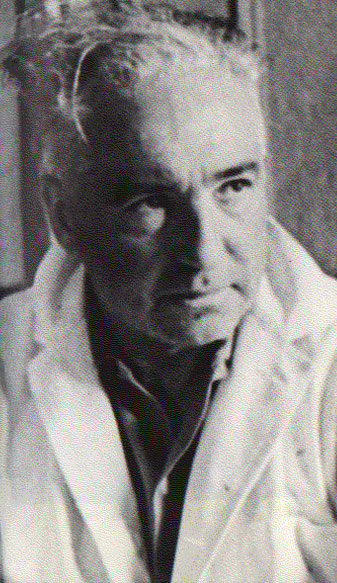
Orgone energy was originally observed by Wilhelm Reich, M.D., a psychoanalyst, in the late 1920s, as a bio-electrical charge whose flow within the body could be visibly seen as waves passing through his clinical patients as they experienced intense emotional breakthroughs. Later, in the 1930s, to confirm his visual observations, Reich was able to objectively measure the movements of this energy, using a very sensitive millivolt meter with sensors attached to the body to record the subtle bio-electric charge. He found that the energy flowed from the inside body core to the outside surface (toward the world) when a person felt pleasure or expansion, and, conversely, from the surface to the interior (away from the world) during states of anxiety, fear, and contraction.
Reich also noted that the conditions of expansion and contraction affected a person not only emotionally, but down to the autonomic nervous system, and to the cellular and even chemical levels. States of expansion produce parasympathetic conditions, associated with dilation of the blood vessels and increased circulation, pain relief, better digestion and peristalsis, lower blood pressure, and the stimulation of potassium and lecithin production, along with a sense of well-being and sexual excitement. States of contraction, however, produce sympathetic effects: constricted blood vessels, less blood flow, and often pain; the contracted condition also increases blood pressure, heart rate, adrenaline flow, and cholesterol, inhibits digestion and blood supply to the genitals, and is associated with the emotions of anxiety and “stress.” The ability of the body to expand and contract, and not become “stuck” in one mode, created what Reich called the pulsation of life, which distinguishes the living from the non-living. This pulsation of expansion and contraction also followed a specific four-beat rhythm: Tension — Charge — Discharge — Relaxation. Reich observed this energy pattern within the organs of the body, from the beat of the heart to the peristaltic movements of the intestine and the bladder, and especially in the sexual function of orgastic discharge; he called this pulsating pattern the function of the orgasm, or the Life Formula.
Dr. Wilhelm Reich lived in Austria, Germany, Denmark, Sweden, and Norway, then in New York, and finally in Rangeley, Maine, from 1944 until his death in 1957. Orgonomy covers many topics, but begins with the theory of neurosis in humans, as related to the natural flow of life energy being blocked in the body by traumatic experiences in life; many of these also caused sexual impotence. Dr. Reich worked closely with Sigmund Freud during this work, and the results are written in his books The Function of the Orgasm (1927) and Character Analysis (1933). Vegetotherapy (Reichian therapy) was developed by Dr. Reich in the 1920s and 1930s, and is used in part by many of today’s therapies, such as Gestalt therapy, bioenergetics, Rolfing, and primal scream therapy, to name a few. His study of neurosis was applied to the masses in his works The Mass Psychology of Fascism (1933) and People in Trouble (1936), and also in The Invasion of Compulsory Sex-Morality (1931), The Sexual Revolution (1935), The Murder of Christ (1951), and Listen, Little Man! (1948).
His work continued in the area of “the Bion Experiments” — the creation of life from inorganic matter — and with further studies into orgone energy (also known as chi, prana, and by other Eastern names). Reich performed several scientific experiments that objectified the presence of orgone energy (The Cancer Biopathy, 1948). Many of his articles were published in journals including the Annals of the Orgone Institute, the International Journal of Sex-Economy and Orgone Research, the Orgone Energy Bulletin, and CORE (Cosmic Orgone Engineering), as well as the book Ether, God and Devil / Cosmic Superimposition (1951). He created instruments to accumulate orgone energy (orgone accumulators, which sped up the natural healing of the body). He experimented with the reaction of orgone energy to nuclear radiation (The Oranur Experiment, 1951), which demonstrated the significant health dangers of low-level radiation. He also created instruments that could return self-regulation to weather (the cloudbuster) (Contact with Space, 1957). He researched the source of UFOs’ energy, and discovered a motor force from orgone energy. He should be remembered most for his work for children: throughout the period from the 1920s through the 1950s, he advocated for natural childbirth, natural parenting, self-regulation, and the sexual rights of youth and adults.
www.orgonics.com — www.orgone.org — www.orgonelab.org
Dr. James DeMeo has been investigating the work of the late Dr. Wilhelm Reich since 1970, and founded the Orgone Biophysical Research Laboratory (OBRL) in 1978. With cooperative assistance from a network of professionals and institutes supportive of Reich’s original discoveries, OBRL has grown to become one of the world’s primary centers for genuine and uncompromised research and educational programs focused on Orgonomy — the science of orgone (life) energy functions in nature, as developed by Reich in the first half of the 20th century. Starting in 1977, as part of his graduate research at the University of Kansas, DeMeo undertook replication studies of Reich’s biophysical research — specifically, a systematic evaluation of the Reich cloudbuster, which yielded positive results. The acceptance of DeMeo’s work by the KU faculty constituted the first time any aspect of Reich’s controversial biophysical research had been validated by peer review within a mainstream academic institution.
Through OBRL, and with the cooperative assistance of many others dedicated to Reich’s work, DeMeo has since directed field applications of the cloudbuster apparatus, successfully ending droughts across the USA and overseas, as well as reducing the energetic stagnation characteristic of wetter regions suffering from chronic air pollution and forest death. A number of desert-greening expeditions have also been organized and directed by DeMeo within the arid zones of the southwestern USA, and into the dry regions of Namibia and Israel, producing a dramatic verification of Reich’s earlier findings on the ability of the cloudbuster to bring rain under even extremely dry conditions. With the support of local governments, a five-year desert-greening experiment was also undertaken in the 1990s in the East African Sahel region, adjacent to the hyper-arid Sahara Desert. All of these projects have produced significantly positive results, with sometimes dramatic increases in rainfall — ending dry episodes of sometimes decades’ duration, filling reservoirs, and greening parched landscapes.