Stretching
Almost every piece of advice in this book goes in through the mouth: what to eat, what not to eat, which supplement to take. Not this chapter. Stretching costs nothing, is not sold in any pharmacy, and can be done on the floor of your house — which is precisely why almost nobody prescribes it to you.
With the years the body closes up. It is not only a matter of age: it is a matter of sitting. A body that spends the day folded into a chair learns that shape, and afterwards it struggles to let it go. Stretching is the cheapest way there is of reminding the body of the range of movement it already had.
What a stretch really does
Here it is worth being exact, because a great deal of loose talk gets repeated. When you stretch and over time reach further, it is not that the muscle has become longer. A recent review that gathered 65 studies with 1,542 adults made it clear: stretching on its own does not lengthen the fibers of the muscle.
What does happen is two things. In the moment, the muscle-and-tendon unit becomes less stiff. And over the weeks, on top of that reduced stiffness, you develop more tolerance to stretching: the body stops raising the alarm so soon and allows you to go further. Part of the gain belongs to the tissue and part belongs to the nervous system.
Note: that does not take away its value. It means the range of movement is genuinely gained, but by a different road than the one usually described — and that it is lost if you stop practising.
The four types
Static: reach the position and hold it still. This is the classic one, and the one that works best for gaining range over the long term.
Dynamic: controlled, repeated movement that takes the joint through its range without holding still. This is the one that serves to warm up before moving.
PNF (proprioceptive neuromuscular facilitation): contract the muscle for a few seconds against a resistance, then release and stretch. It gives very good results for range, but you normally need someone to assist you.
Ballistic: bouncing inside the stretch. This one I do not recommend. The bounce overrides the reflexes that protect the muscle, and it is the easiest way to injure yourself while stretching.
When to stretch
Before moving, dynamic stretching. After moving, or at a separate time of day, static stretching.
The order matters: a sustained static stretch done right before a hard effort can lower performance for a while. If you are going to lift something heavy, run or compete, warm up with movement and leave the long stretching for afterwards.
What stretching does not do
And here I am going to tell you what almost no trainer tells you, because in this book I do not sell miracles.
It will not take away your soreness. The idea of stretching before or after so as not to wake up aching does not hold up: studies in healthy people find, fairly consistently, little or no effect on the muscle soreness of the following days.
And on injuries, the evidence is divided. There is not enough basis to say that routine stretching, on its own, lowers the overall number of injuries. There is some signal in favour for muscle and tendon injuries, but it is preliminary. If somebody promises you that stretching will keep you from getting injured, they are selling you something.
Stretch for what it does do — moving better, feeling loose, and what comes next — and not for what you are promised.
What almost nobody knows: the arteries
This is the finding that most caught my attention, because it has nothing to do with flexibility. A meta-analysis of eight studies, with 213 middle-aged and older people, found that a stretching programme reduced the stiffness of the arteries and improved the function of the endothelium, the layer that lines the vessels on the inside. Diastolic pressure also came down, by about 2.7 mmHg on average, along with the resting heart rate.
These are modest figures and the number of people studied is small, so do not take it as a treatment for blood pressure. But it points at something that fits with everything else in this book: moving and loosening the body does the circulation good, and the circulation is the root of almost everything. See also the chapter on healing through energy.
The routine
Seven stretches, in order from the head to the feet. Hold each one for 30 to 60 seconds, breathing slowly, and repeat on the other side where it applies. Once a day is enough; what rules here is consistency, not intensity.
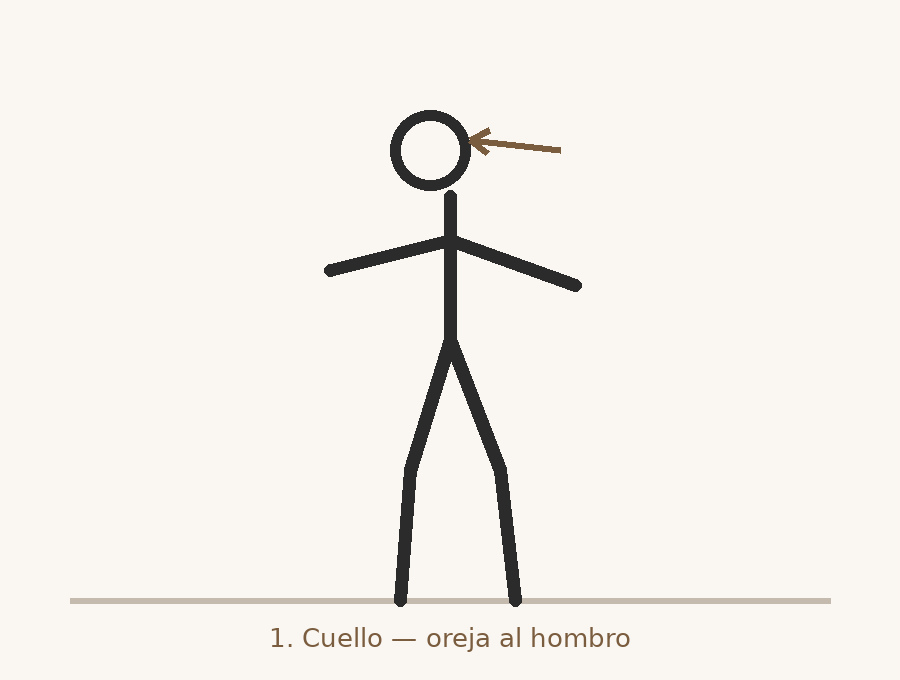
Neck. Seated or standing, take your ear towards your shoulder without raising the shoulder. If you want a little more, let your hand accompany the weight of the head; do not pull.
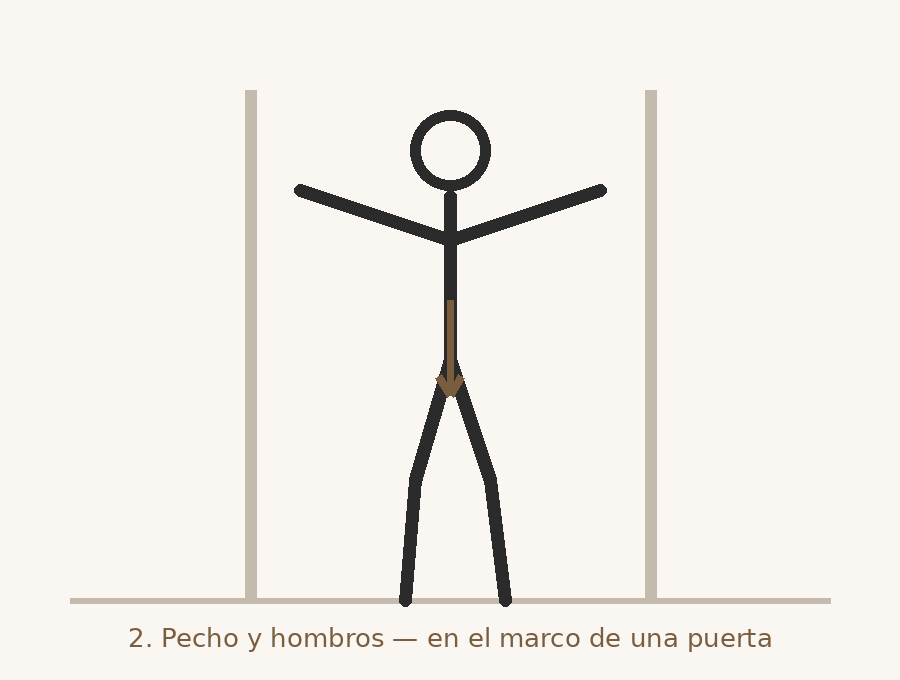
Chest and shoulders. In a doorway, rest your forearms on the frame and let your body move forward. This is the antidote to hours in front of a screen.
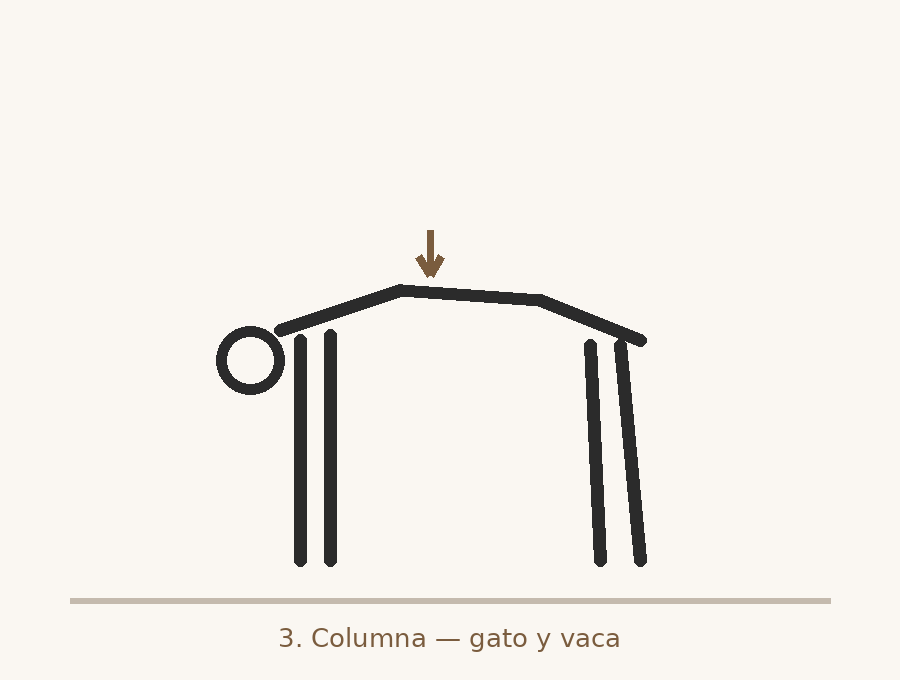
Spine. On all fours, alternate slowly between arching and rounding the back, following your breathing. It is the best alarm clock there is for the back.
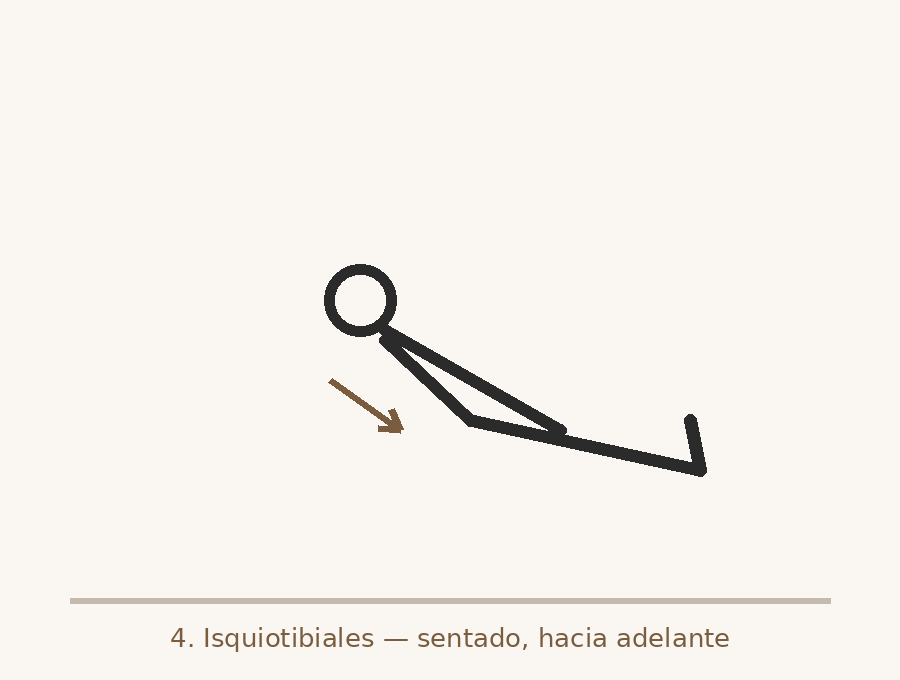
Hamstrings. Seated with the legs extended, go forward from the hip, not by bending the back. The knees may stay slightly bent.
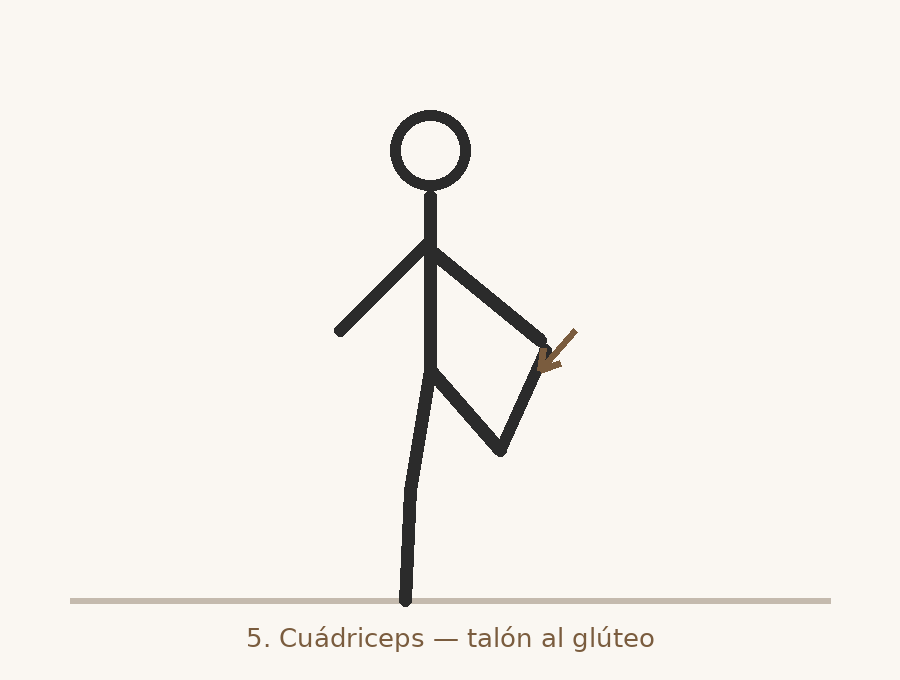
Quadriceps. Standing, bring your heel towards your buttock and keep the knees together. Lean on a wall if your balance is short.
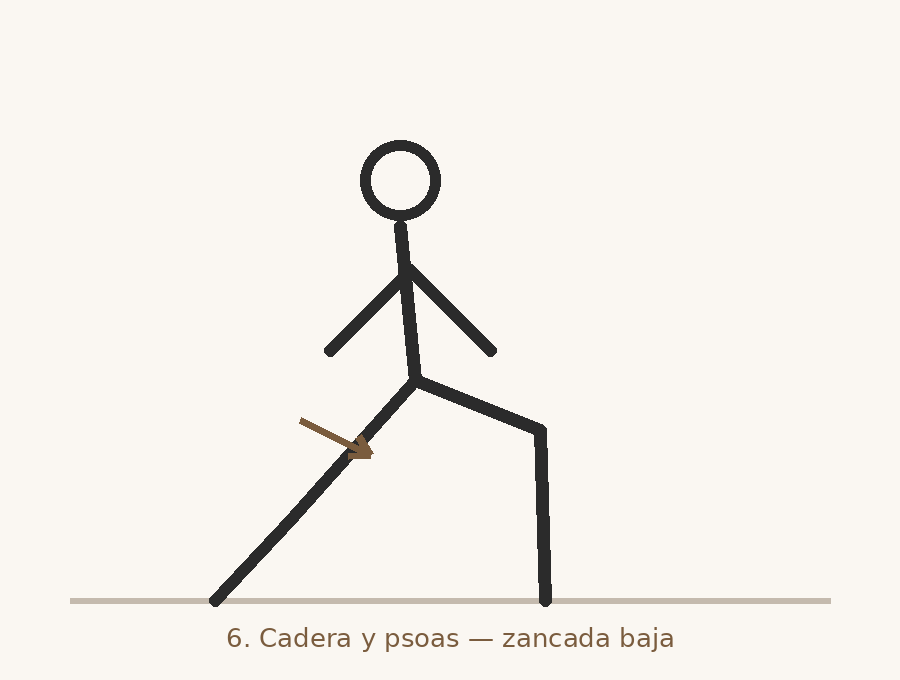
Hip and psoas. In a low lunge, sink the hip forward with the trunk upright. If you spend the day sitting, this is probably the one you need most.
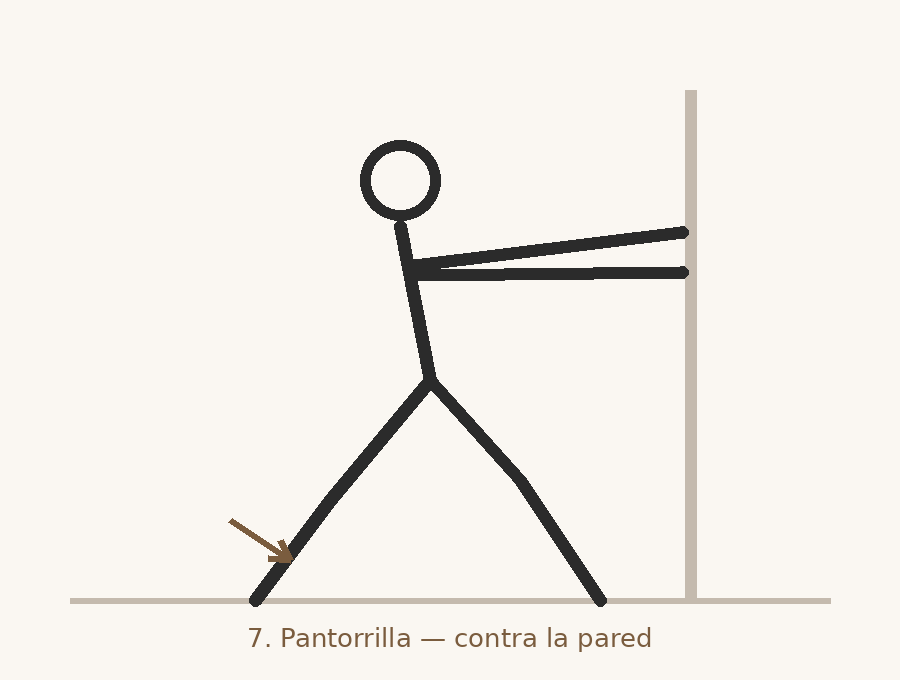
Calf. Hands on the wall, one leg back with the knee straight and the heel stuck to the floor. Then repeat it with the knee slightly bent, to reach lower down.
Note: rules for not hurting yourself
Never stretch into pain. The correct sensation is a tension you can hold while breathing calmly. If you have to hold your breath or clench your teeth, you have gone too far.
Do not bounce. Do not stretch an injured muscle or an inflamed joint without someone who knows having looked at it. Breathe: many people run out of air while stretching, and there the body closes up instead of letting go. And go slowly for the first days, as with everything else in this book.
In short
Stretching is free, takes five or ten minutes, and is one of the few things in this book you do not have to buy. It gains you real range of movement, though by a different road than the one usually told; it probably helps your arteries; and it will not spare you the soreness or guarantee you will not get injured. Do it to move better and to feel loose, every day, and the body will thank you for many years.
To learn more (sources in English)
Why range of motion improves with static stretching (review of 65 studies, 1,542 adults): https://pmc.ncbi.nlm.nih.gov/articles/PMC12152101/
Stretching and arterial stiffness (meta-analysis, 8 studies, 213 people): https://pmc.ncbi.nlm.nih.gov/articles/PMC7460052/
Stretching to prevent or reduce muscle soreness after exercise (Cochrane review): https://pubmed.ncbi.nlm.nih.gov/21735398/
Stretching and the risk of sports injury (systematic review): https://pubmed.ncbi.nlm.nih.gov/15076777/
Long-term effects of stretching on range of motion (review with meta-analysis): https://pubmed.ncbi.nlm.nih.gov/37301370/